Source: Freepik
As a Filipino business owner, your dream of growing worldwide might be a bit too far out of reach. First off, even if you had the will and resources, where would you start?
This article will discuss two key concepts about growth: internationalization and globalization.
To clarify, learn the difference between internationalization vs. globalization in e-commerce. Better yet, learn the first step to achieving your dream of worldwide success!
Understanding the Concepts of Internationalization and Globalization: Key Differences
Globalization vs. internationalization – two different concepts, yet they are often confused. It’s because both terms deal with the global aspects of your online store.

From idea to reality in minutes.
Create your online store quickly and easily.
No complicated procedures or technical knowledge required.
However, the difference between globalization and internationalization lies in their focus and scope. In particular, here are three key differences of the two:
- Scope. Globalization includes the whole interconnected world. On the contrary, internationalization refers to expanding one specific company or product into other countries.
- Focus. Globalization focuses on the connection and global integration of economies. In contrast, internationalization is a way to expand into international markets.
- Action vs. result. The internationalization process is the actions your online store takes. After internationalization, globalization is the result of these actions.
Only 1.3% of 530 firms in Metro Manila have expanded internationally. This is a big missed opportunity, because SMEs have a big role in the Philippine economy. With proper execution, export revenues are a solid move for economic growth.
We’ll look further into these two concepts to better understand how they’ll help your online store.
Internationalization In E-commerce

Source: Freepik
Going global with your online store is becoming more popular. As the world becomes smaller, the world economy is becoming more complicated.
Thus, there’s a growing desire to pursue more chances abroad. Expanding to other countries is a way of “internationalizing” your internal operations.
Digital platforms and the Internet make all these possible. So, learn all the key points of this concept below.
Definition and Scope
What is internationalization?
Internationalization is breaking into local markets abroad.
For example, say you have an online store selling customized socks. At first, you’re only selling in Metro Manila. But soon, you start shipping to a few other countries. If that goes well, you expand into even more markets later on.
This expansion comes with some changes for your company. First, you may need to change products to fit the cultural needs of different national markets. Thus, you make designs that appeal to a specific audience with various languages.
Also, you even prepare your e-commerce website to handle more traffic. After all, you will be getting more site visits from abroad.
Internationalization, therefore, is preparing an online business to serve customers outside national boundaries.
Tailoring the User Experience for International Markets
Users from different countries will have varied expectations. Thus, tailoring the user experience for different cultures and backgrounds is necessary for internationalization. It builds relationships and trust with global customers.
Specifically, there are three key steps:
- Language localization. Your message should resonate with your audience on a cultural level. Do not rely on literal translations. Instead, having expert native speakers proofread and ensure your content’s accuracy is the way to go.
- Currency and payment options. Include popular local payment methods. Show prices and accept payment in multiple currencies. International payment processing gives your customers a smooth checkout.
- Cultural adaptation. Knowing users’ language and any cultural nuances is key. Adapt everything from visuals to content and date formats. As a result, your content will resonate with your audience.
When your efforts are paying off, foreign users will start leaving positive reviews. You will see more traffic on your website and, therefore, more sales. In contrast, a bad strategy will only damage your reputation.
Cross-Border Logistics and Shipping Considerations
Source: Freepik
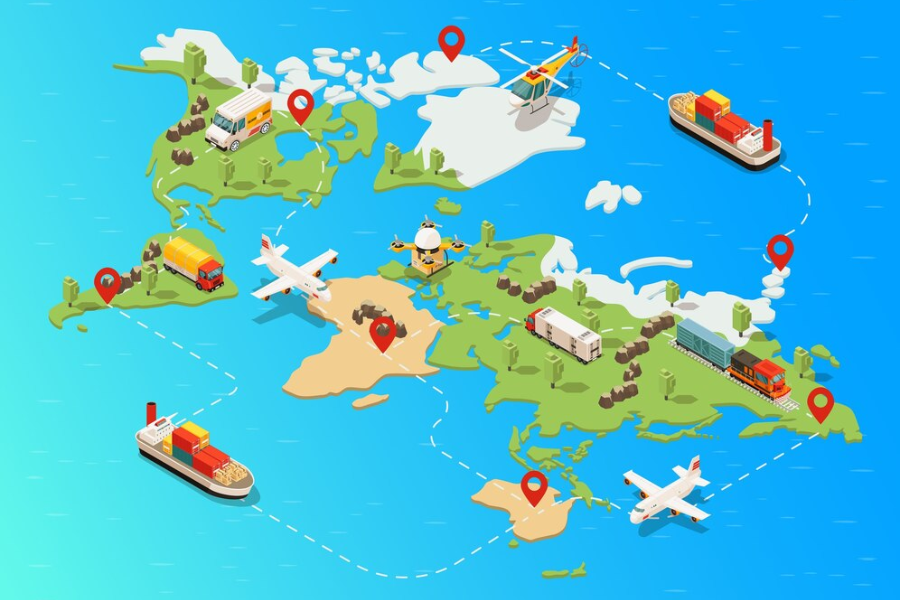
International logistics is managing shipping your goods or products across global borders. Thus, it ensures that your customers’ orders are delivered to them.
Logistics is referred to as the ‘backbone’ of world trade. In other words, your online shop won’t be possible without it. It lets raw materials go to factories, and products go to your customers’ homes.
Thus, consider these three key concepts:
- Customs and duties. Understand Harmonized Systems (HS) codes, duty rates, Free Trade Agreements (FTAs), and Incoterms.
- Shipping methods and carriers. Research about international shipping for e-commerce. Carriers offer their own methods. There’s express shipping, expedited shipping, and standard shipping. Thus, factor in your customer’s needs when picking the best shipping option.
- International returns and customer support. Returning goods sure is a waste, but it happens. You need to consider the return shipping costs and decide who will pay them. Be open about potential fees. Make sure your customer service representatives are active.
Setting a clear process will prevent a few problems that can affect customer satisfaction. As a result, your global users will understand your policies. This sets their expectations and prevents issues later on.
Legal and Regulatory Compliance
Following laws and regulations set by countries is a must for cross-border transactions. For this reason, follow these laws when expanding.
Your compliance will ensure you run ethically, securely, and in line with international standards.
- International trade laws. These laws will govern the movement of your goods or products. Knowing these laws will overcome trade barriers and ensure smooth operations.
- Data protection and privacy laws. With the growing concern over online privacy, you should ensure you protect customers. Safeguard users’ data and secure their privacy to foster trust.
- Taxation and compliance requirements. Tax laws vary among foreign countries. Ensure your legal strategies are globally integrated to handle this complexity. Avoid tax evasion accusations and financial penalties.
Complying with relevant laws and regulations builds trust. It will even enhance your brand reputation globally.
In contrast, not complying has big consequences. You’ll pay hefty fines, lose customer trust, and, in extreme cases, even need to close.
Thus, prioritizing legal and regulatory compliance is not just good practice. It’s critical for achieving success on an international level.
Marketing Your E-Commerce Store Internationally
Localizing means tailoring your global marketing for e-commerce. This lets you resonate with your target audience.
A personalized approach can deliver your brand message best. Localizing your marketing and ads engages your audience. It will also maximize your reach, and even boost revenue potential.
To localize your marketing efforts, follow these essential steps:
- Localized SEO and keyword research. Understand the search habits and language used by your target local market. This optimizes your website and content to appear in local search engine results.
- Adapting marketing campaigns for target markets. Your marketing campaigns should catch the attention of your audience. Translate your content into its intended meaning. Then, apply to their cultural values and sensitivities. This is where expert local translators and marketers shine.
- Social media and influencer strategies. You can also amplify your visibility by partnering with local influencers. They create an authentic connection between your brand and your audience. Also, use local social media.
Using these localization tips can improve brand perception. True, resonating with your audiences may be hard. But with a good strategy, strong connections in the international market are possible.
Still, you need to be careful. An unsuccessful localization may confuse and put off your audience.
Leveraging Social Media Marketing for Global Reach
Social media connects you to a global audience. Platforms like Facebook, Instagram, and TikTok have billions of users from many countries.
Thanks to these networks, national borders no longer matter. You can post something and have it go viral in a dozen countries in a week.
Social media is powerful for showcasing what you offer to the world. But you can only do it with the right strategy. Follow these tips:
- Localized content. Create content that matches the people you are targeting. Say you’re targeting Japan. To appeal to them, post in Japanese and lean into Japanese imagery. The same goes for the Indian market or any other country you target.
- Advertise locally. Use social media ads to target specific countries or regions. Most platforms can filter your audience based on location, interests, and habits. Therefore, you can reach people who show more interest in your products.
- Partner with influencers from different countries and localities. Influencers have loyal followers who trust their recommendations. They can reach their audiences in ways that you can’t. By working with foreign influencers, you introduce your brand to their audience.
Social media is a potent tool. It’s powerful, but most of all, it’s cheap. Nevertheless, it’s one of those things that are easy to do, but difficult to do well. To lock in your social media success, have a solid social media strategy or hire an expert.
Optimizing Your Website for International Search Engines (SEO)
International SEO (Search Engine Optimization) is critical. Thus, you can rank your website higher in many countries.
This attracts global visitors. More importantly, it ensures people from different regions can find you online. Thus, here are the key things to consider:
- Global keyword research. Research keywords in other languages and regions.
- Translate. Translate your website into the languages of the countries you want to target. Make sure translations are accurate and culturally appropriate.
- Use hreflang tags. These tags tell search engines which versions of your pages to show to users.
- Local backlinks. Get backlinks from local websites in your target countries.
- Choose the right domain structure. There are many options. Implement globalization strategies like code top-level domains (ccTLDs) like .ph for the Philippines. There are also subdomains (ph.yourwebsite.com), or subdirectories (yourwebsite.com/ph/).
Optimizing for international SEO ensures that your site remains competitive even globally. It increases traffic and even bolsters your reputation.
Creating Localized Marketing Materials
Different people have varied tastes. This much is not rocket science. Even here, customers in Luzon have different tastes compared to clients in Mindanao.
However, many businesses tend to forget cultural considerations in e-commerce.
Thus, make sure all your marketing materials are tailored. And this doesn’t just mean ads, but also:
- Social media posts
- Product descriptions
- Website content
- FAQs, help documents, and chatbots
- Terms of service
- Privacy policies
- Reviews, testimonials, and more!
From the region down to the individual, ensure your marketing materials fit like a glove. If not, you’ll waste all that money in expanding, only to be disappointed with the results.
Globalization In E-commerce
Source: Freepik
Globalization refers to the interconnectedness of markets. Generally, it’s the breaking down of geographical barriers in online trade. It embraces the opportunities presented by a borderless digital economy.
Unlike internationalization, globalization is not related to a single Philippine company. It’s a global phenomenon.
However, you can use globalization practices for your benefit. So, let’s delve into this concept.
Definition and Concept
Globalization is a complex phenomenon. In its most basic sense, it’s the worldwide interaction and integration of many groups. Different countries’ people, companies, and governments all interact, creating a complicated global network.
International trade, technology, cultural exchange, and many other factors make this interconnected world possible.
For online stores, globalization is essential.
It means expanding your online store beyond your city or even country.
When you globalize your online store, you open your store to a wider audience. Imagine: instead of just selling to customers in Manila, you reach buyers in New York, London, or Sydney. You massively improve your potential.
Expanding Market Reach and Targeting Global Customers
Globalization means expanding the reach of your business beyond its current boundaries.
Currently only delivering in Metro Manila? Through globalization, you attract customers from many regional markets, cities, or even countries.
But what of it? By reaching more customers, you therefore increase the potential for sales. More sales equals higher revenue, thus making you thrive.
Plus, globalization makes you more stable. Relying on a single market can be risky. Expanding your reach spreads your risk across many markets.
Say, your online store in the Philippines is suddenly facing a downturn because of new laws. Without globalization, your only source of income will suffer. But if you’re active in other markets, some will likely still do well.
Here are three steps you can take to expand your market reach.
- Localized website content. Tailor your website content to varied languages and cultures. For example, offer product descriptions in English, Spanish, and Chinese. Thus, your customers will understand and buy your products.
- Currency and payment options. Customers should be able to pay in whatever currency they want. Cater many payment methods. Consider credit cards, PayPal, and local options such as GCash for Filipinos. Alipay for Chinese customers, etc., should also be available.
- Provide localized customer support. Have multiple languages and time zones in your online customer support. Consider using chatbots, even hiring multilingual support staff.
Expanding your market reach boosts your income and spreads your name far and wide. Thus, it’s a must for any online store.
But it’s easy to mess up. If you don’t plan it well, the complexities of globalization might halt your tracks. Competitors can easily overtake you.
Standardization of Products and Services
Standardizing your products and services means keeping them uniform across different markets. As a result, your products have the same quality, specifications, and features everywhere.
Why does it matter?
- Consistent quality. Scalable operations ensure customers get the same thing no matter where they are.
- Streamlined operations. Simplifies internal processes and reduces costs.
However, there’s also an argument for localization. When you localize your offerings, you change them to best suit the needs and wants of the target.
Which should you use? For this, check three key factors:
- Product. Product adaptation means modifying products to fit local tastes. Meanwhile, product standardization means keeping products the same everywhere. Both have pros and cons; you decide which has the most benefits.
- Messaging and marketing. Keep your branding elements the same across all markets. Therefore, you strengthen your brand image and become recognizable.
- Branding strategies. Global branding means having consistent branding worldwide. Meanwhile, localized branding adapts your name to local preferences. You keep the core brand. Use a balanced approach for best success.
Standardizing for global markets is efficient and cost-effective. Meanwhile, localizing captures more of your market.
For all online stores, standardizing versus localizing is a persistent tug of war. There’s no one solution and no one way to approach the issue. You’ll have to depend on your own marketing data and personal insights.
Building Scalable Infrastructure and Operations
If you want to globalize, you need to be scalable. Therefore, you expand your store’s resources and processes without losing efficiency, even when the climate differs.
Scalability lets you confidently handle more clients. Moreover, you lessen the impact of economic and social changes on the global economy. But how can you do this? There are three core factors:
- Logistics. Logistics issues are some of the biggest challenges of international e-commerce. Thus, carefully consider these processes to ensure timely delivery of products worldwide.
- Multilingual customer support. Make your customer service accessible in multiple languages. Hire trained, multilingual support.
- Multilingual e-commerce website. Ensure that you optimize your business for all targetted languages.
- IT Infrastructure. Invest in advanced information and communication technology and cybersecurity. IT thus supports seamless expansion.
These steps will increase your efficiency and flexibility as it grows. Without this, your online store will suffer inefficiencies and poor customer experiences. It may also hinder effective competition in the global market.
Global Partnerships and Collaborations
When entering the global scene, forge partnerships and collaborations for mutual benefit.
Forming alliances with global partners shares your strengths and minimizes your weaknesses. For example, they might provide access to new technologies and resources. Thus, you can boost your business ability.
However, it must all remain mutually beneficial.
Here are key steps to collaborate:
- Strategic alliances and joint ventures. Partnering with foreign companies lets you share strengths and work towards common goals. Thus, look for stores that intersect with yours and share common resources.
- International distribution channels. Don’t just seek new partners. Access new online distribution channels to reach more customers and solve shipping issues. Shipping is the most important part of your online store, don’t skimp on it.
- Partnerships with local service providers. Work with local experts. For you, local partners in the countries are useful. For instance, explore areas like:
- Laws and regulations
- Local marketing or sales, and
- Local product creation, among others
Global actions require international relations. They allow you to learn the global economic system. Therefore, you enhance your ability to compete internationally.
Thus, by partnering with the worldwide stage, your online business will painlessly expand.
Final Thoughts

Source: Freepik
Internationalization and globalization are sometimes used the same. But they are not the same.
This article explained how to expand your business beyond the Philippines through internationalization.
It also covered globalization, the importance of partnerships, and other related topics. Now you know the differences between internationalization vs. globalization.But don’t let all of this knowledge sit and gather dust. Instead, take it to heart and plan how to go global with your ecommerce business.
FAQs

What can affect globalization?
Many factors can affect globalization, including tech advancements, cultural exchange, and media influence. It is a complex process with many factors. Businesses must understand these to respond effectively to many new chances and challenges.
What is a free market?
A free market is an economic system. It’s called that because prices depend on supply and demand. Governments and other bodies don’t intervene in free markets. Businesses trade products and services based on their wants, interests, and abilities.
What role does the United Nations (UN) play in globalization?
The UN is a platform for addressing challenges on a global scale. It promotes shared solutions, especially for big problems (environment, aid to developing countries, etc.). It also created other important global entities like the World Bank.
What are the benefits of international e-commerce?
An international e-commerce strategy provides many opportunities. First, you get access to a wider pool of potential customers. This creates many different benefits, primarily increased sales. Second, you diversify your business, making it more stable. Lastly, you even have a wider and deeper source of data for analytics.
 Ventsislav Kirilov