Introduction: Why Product Photography Matters in E-commerce
In today’s fast-paced market of shopping online the first impression is everything. While browsing online stores customers make buying choices in a matter of seconds, usually just based on images of the product. As per MDG Advertising, 67% of consumers who shop online say quality images are more important than descriptions of the product or reviews before making purchases.
With online platforms such as Amazon and Shopify creating high-quality visual standards eCommerce businesses need to ensure that they ensure that their e-commerce product photography is up to par with professional standards. The best images not only increase the conversion rate by as much as 30%, but can also lower return rates since clear, precise images provide customers with a clear and accurate picture of the product they’re purchasing.
Essential Equipment for Professional Online Store Images
Quality online store images require the proper equipment. Even though smartphone cameras have vastly advanced, investing in top-quality equipment could make all the huge difference in the clarity, quality and quality.
1. Camera
Your success is online
Unleash your potential with an online store.
No limits, no boundaries.

Professional photographers typically choose DSLR and mirrorless camera such as Canon EOS R5 or Sony A7R IV. Canon EOS R5 or Sony A7R IV to capture clear, high-resolution pictures. But, smartphones of the present like Samsung Galaxy S23 Ultra or the iPhone 15 Pro or Samsung Galaxy S23 Ultra are equipped with incredible computational photography features which make them suitable alternatives.
An example of a case study: A recently completed Shopify research revealed that shops which upgraded their photos of products with high-resolution pictures experienced a growth of 22% in conversion rate within 3 months.
2. Tripod
A solid tripod reduces camera shake, and provides steady product images. When it comes to photography for e-commerce using a tripod that has a horizontal arm can be used for shots that are overhead, flat and tiny items such as food or other accessories.
3. Lighting Setup
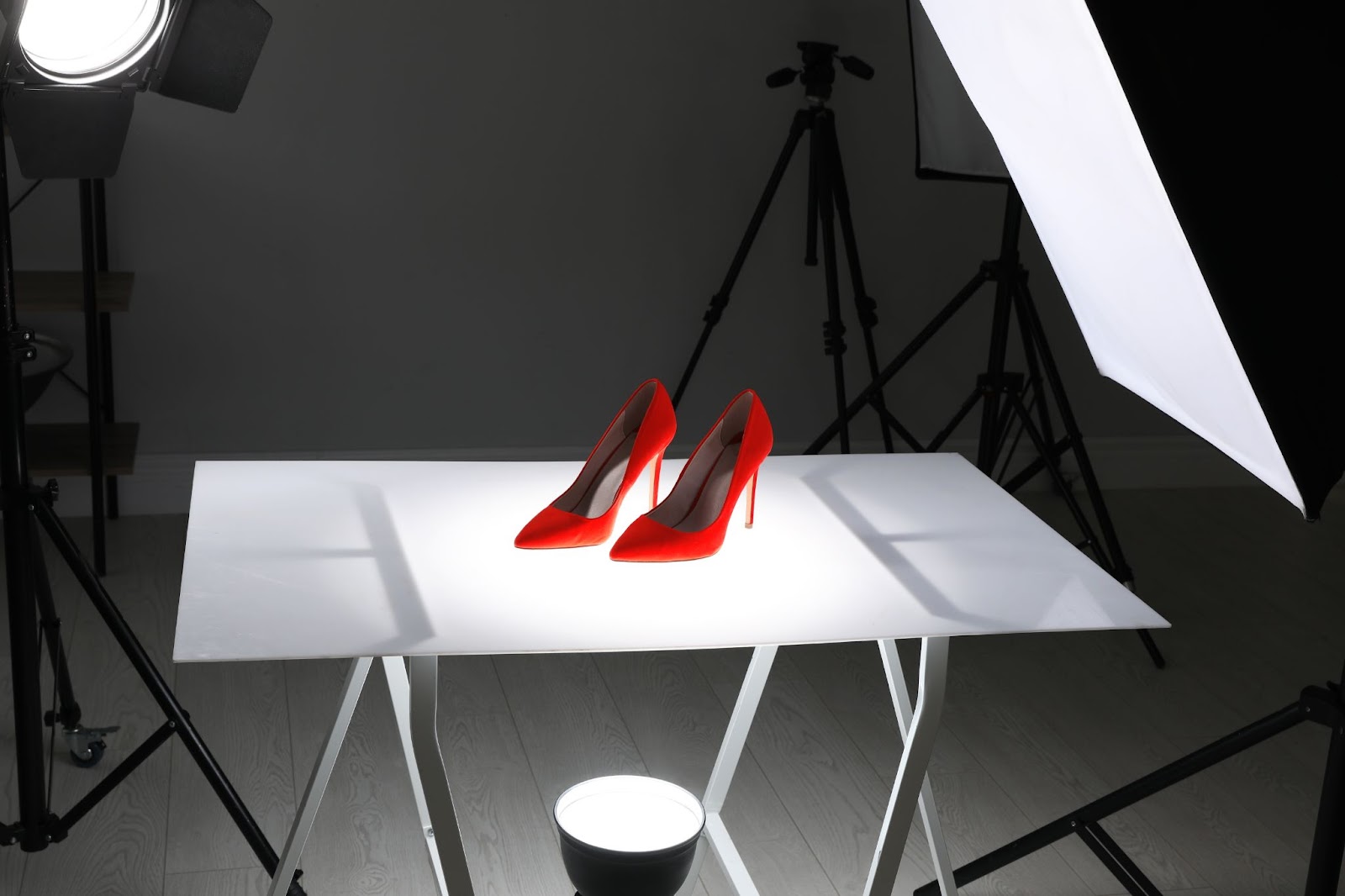
A proper lighting system can improve the visibility of your product and speeds up post-editing. There are a variety of options to choose from:
- Softbox lights: Even soft lighting with diffused effects for professional results.
- Ring lights: Ideal to illuminate jewelry, beauty items and photography.
- Natural light: Ideal to shoot lifestyle photos and cost-effective solutions.
4. Backdrops & Props
An uncluttered white background helps keep pictures clear and is in line with the demands of large markets like Amazon as well as eBay. But, textured or colored backgrounds are a great way to boost creativity for particular brands, specifically when it comes to home décor and fashion.

5. Editing Software
The post-production process is crucial to polish image quality. Adobe Photoshop, Lightroom, and Canva are the industry standard tools to adjust the brightness, contrast as well as background removal.
Best Practices for E-commerce Product Photography
Photographing breathtaking online store images requires more than a camera that’s good enough. It’s about technique as well as attention to details.
Learn how to elevate your photography of products up a notch:
1. Use the Right Angles
Offering multiple angles helps customers get an understanding of your product’s strengths. The most common angles are:
- Front-facing shots: Views from the front of the item.
- Back and side views: Highlight additional information.
- Close-ups: Highlight textures, and exquisite work.
- Lifestyle photos: show how the product is used in actual life.
An example: A clothing retailer discovered that incorporating 360-degree images of its products increased customer participation by 58% leading to lower rates of return.
2. Maintain Consistent Lighting
Lack of consistency in lighting causes the appearance of a disorganized style. Light that is soft and diffused will ensure the color of your product is true to reality.
Pro Tip: Make use of an illuminated box for small items such as electronics, jewelry, or other items to reduce the harsh shadows.
3. Create a Cohesive Brand Aesthetic
Online-based companies with consistent photo designs increase trust among customers. Be sure to have uniform lighting, backgrounds as well as image sizes for all the pages.
4. Optimize Image Quality Without Slowing Load Times
Images with high resolution improve clarity, but may slow the speed of websites. For SEO optimization as well as performance:
- Convert images with TinyPNG or JPEG-Optimizer
- Make use of WebP format to get a better file-quality-to-file-size ratio.
- Make sure images are less than 200 KB to ensure faster loading speeds.
Case Study: An eminent online retailer has reduced its website bounce rates by 35 percent following improving the quality of its product images to speed up loading.

5. Post-Processing for Perfection
Editing your photos can make them look polished. To learn more about product photo tips, visit our article on the most advanced editing methods. Editing should be inclusive of:
- Color correction: Ensure accurate color representation.
- Background removal: Clear away distracting elements for a professional appearance.
- Retouching: Eliminate blemishes and improve the details of your product.
DIY Photography DIY vs. Professional Photographers: Which Is Right for You?
Do you want to handle the photography of your products in-house, or contract an expert? This article will help you decide between the two options:
DIY Product Photography
Pros:
- Budget-friendly.
- Complete creative control.
- Ideal for smaller catalogs.
Cons:
- Learning takes time.
- Might not be as professional.
Professional Product Photography
Pros:
- High-end results.
- It saves time and effort.
- Great for catalogs of large products.
Cons:
- Costs are higher.
- There is no immediate control of the entire process.
Examples: Most successful businesses began by using amateur photography of their products then move to professional photographers as they grow their businesses.
Conclusion: Invest in Quality Product Photography
When it comes to e-commerce, images can be the difference between a successful and unsuccessful sale. When investing in premium e-commerce product photography, brands increase conversions, establish trust and increase sales. Utilizing a smartphone or a professional system, it’s the same goal of creating compelling quality online store images that attract and convert potential customers.
Last Thoughts: “Good product photography doesn’t just sell a product–it sells a brand’s trust and quality”, adds Emma Clarke, Senior E-commerce Analyst at MarketVisuals.
Begin to optimize your image of the product now, as when it comes to online shopping, a photo can be worth thousands of dollars.
Frequently Asked Questions:

1. How do I build an attractive and professional product photography studio from the comfort of my home?
The idea of establishing a photo studio at home studio can be both affordable as well as efficient. Create a tiny room with plenty of natural light. Choose a neutral, clean backdrop such as a white poster board, in order to minimize distracting elements. A solid table could serve as your camera’s shooting area. Get a tripod for your camera to maintain your camera’s stability and produce sharp photos.
If the natural light source is not enough for your lighting needs, think about affordable options such as softbox lights and rings lights for uniform illumination. This configuration allows for consistently and high-quality images for your products, without the requirement for an expensive studio.
2. Do I need to employ an experienced photographer to take my images for my online store?
Although employing a professional photographer may produce high-quality photos but it’s not necessary in small-scale firms with a limited budget. If you have the proper equipment and skills, you’ll be able to create stunning product images yourself.
If you do not have the time or funds to learn the art of photography or you have products that require elaborate shoots (like clothes on models or expensive jewellery) Professional photographers could be beneficial. Professional photographers have expertise on lighting, composition as well as post-processing. This will ensure your product is presented with the highest quality possible.
3. What is the importance of post-processing e-commerce product photography?
Post-processing is an essential step of e-commerce photography. The process involves editing the images for correcting exposure, adjusting the colors, eliminate any imperfections on the background, as well as improving the quality of your images overall. When you’ve got a good photography session, post-processing may help enhance images in order to comply with professional standards, and also ensure uniformity throughout your range of products.
Tools such as Photoshop or Adobe Photoshop and Lightroom are often employed for this purpose. In the absence of post-processing, you could end up with photos that look unpolished and could reduce your perceived worth of the products you sell.
4. What are the advantages of using 360-degree photography for products?
360-degree images of products allow customers to look at products from many angles to provide an extensive knowledge of the product. The interactive nature of the experience will increase the customer’s engagement, boost confidence when purchasing, as well as reduce the rate of return.
The implementation of 360-degree perspectives is particularly helpful in products where detail and workmanship are the primary selling factors, like shoes, electronic devices and home products. Though it might require extra work and resources to make 360-degree views, the benefits in sales and satisfaction of customers could outweigh the cost.
 Ventsislav Kirilov